Howdy cowboys and cowgirls. For your safety and enjoyment, the MCP officers would like to share some information with you about “Power Factor” in your hand-loads. Please read this article carefully. Its purpose is to ensure our MCP members’ safety. Note: This article only applies to smokeless powder loads.
Power Factor Definition
Below is the Cowboy Action Shooting Power Factor definition from the Glossary of the SASS Cowboy Action Shooting Shooter’s Handbook Version 27.5:
| CAS Power factor – Bullet weight (in grains) times the velocity (in feet per second); divided by 1000. The minimum standard in all SASS matches for smokeless categories is not less than 60 and no velocity less than 400 fps. Maximum velocity for revolvers is 1000 fps. Maximum velocity for rifles is 1400 fps. |
Below is the Wild Bunch Action Shooting Power Factor definition from the Glossary of the Wild Bunch Action Shooting Shooter’s Handbook:
| WBAS Power Factor – Bullet weight (in grains) times the velocity (in feet per second) divided by 1000. The minimum standard in all Wild Bunch™ Action Shooting matches is not less than 150. Maximum velocity for pistols is 1000 fps. Maximum velocity for rifles is 1400 fps. |
You are encouraged to click one or both of the Shooter’s Handbook links above to learn more about the SASS Power Factor.
Why Is Power Factor Important to You and Our Club?
Jammed Cylinder
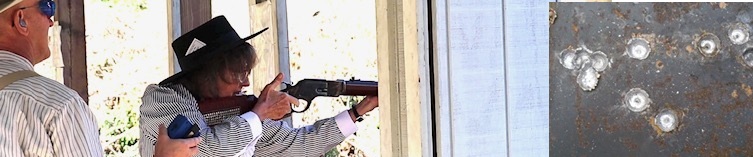
Too little charge can result in the primer backing out of the primer pocket when fired. A backed-out primer can (and usually does) prevent the revolver’s cylinder from rotating to the next position. On the other hand, a sufficient charge slams the base of the brass casing against the frame’s recoil shield hard enough that the primer cannot back out of the primer pocket. Below is a photo of a backed-out primer that bit me. Put a fired piece of brass in one of your revolvers and then, using an automotive feeler gauge, measure the head space (the space between the brass and the frame. It doesn’t take much to jam a cylinder with a “proud” primer.

Squibs
Too little charge can result in a squib. That is, a round that goes off but the cast lead bullet does not leave the barrel. The pistols and rifles that we use in Cowboy Action shooting have rifling grooves in their barrel. The cast lead bullet is intentionally sized to be bigger than the inside diameter of the barrel (the ridges called lands). This rifling design imparts a spin on the bullet, keeping it stable in flight. When a round is fired, the sudden pressure must be enough to enable the cast lead bullet to escape the brass case and be forced out of the barrel despite the drag of the barrel’s lands.

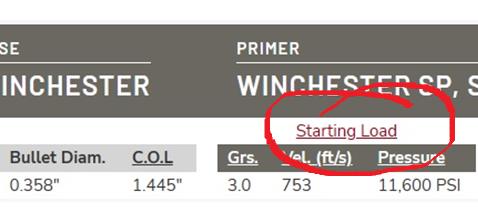
So, please be safe and keep your hand-loads charged to at least the powder manufacturer’s “Starting Load” for the caliber and cast bullet that you’re using.
Voluntary, Unofficial Power Factor Checking Station
At the December 2024 and January 2025 matches, MCP will have a voluntary, unofficial Power Factor Checking Station available to competitors. The station will be manned by an MCP Range Officer. The Station will be available to you approximately 1/2 hour before the match (8:30 a.m.). You’ll need to bring 4 extra rounds from your match ammo. Results will be unofficial and will not affect that day’s Cowboy Match. At this time, our club has no plans to conduct official Power Factor checking.
Be Safe
Our club is a SASS-affiliated club that abides by the SASS Cowboy Action match rules. Using ammo that does not meet the Power Factor requirement is not only SASS-illegal, it’s also dangerous to you and others. Let’s all be safe while we enjoy our Cowboy Action shooting hobby.
– MCP Officers
 McLEAN COUNTY PEACEMAKERS
You must be logged in to post a comment.